Application of RFID Technology in Disaster Situations: An Innovative Approach to Emergency Management
Radio Frequency Identification (RFID) technology has become an essential tool in various sectors, from logistics to retail, due to its ability to track and manage assets in real time. However, in the context of natural disasters and humanitarian emergencies, RFID is proving to be especially useful in coordinating and optimizing disaster response. Below, we explore how this technology can transform emergency management, improving efficiency, safety and response capacity itself.
RFID applications in disaster situations
- Tracking and Management of Critical Resources
In a disaster scenario, it is crucial to have a fast and efficient inventory and logistics system. RFID tags allow emergency response teams to monitor the movement of critical supplies, such as food, water, medications, and rescue equipment, ensuring resources arrive in a timely manner to areas where they are needed most. For example, in areas affected by hurricanes or earthquakes, RFID makes it possible to verify the status of supplies in collection centers in real time, avoiding duplication or loss of inventory.
- Coordination of Rescue Equipment and Personnel
RFID technology allows real-time location of each member of the rescue team, facilitating the visualization of their location on a centralized map. This allows coordinators to monitor operations in difficult-to-access environments and react quickly to changes in the situation. The precise location of each piece of equipment allows tasks to be assigned quickly and efficiently, ensuring that human and material resources are where they are needed at all times. This coordination improves the speed of response.
- Identification and Monitoring of Affected Persons
One of the biggest challenges in natural disasters is registering and tracking affected people, especially in temporary shelters. RFID wristbands allow for quick identification of evacuees and access to key information, such as medical needs and personal data. This is especially valuable for family reunification and healthcare delivery. In places like field hospitals, RFID makes it easier to track patients, allowing medical staff to respond efficiently and quickly.
- Infrastructure and Damage Mapping
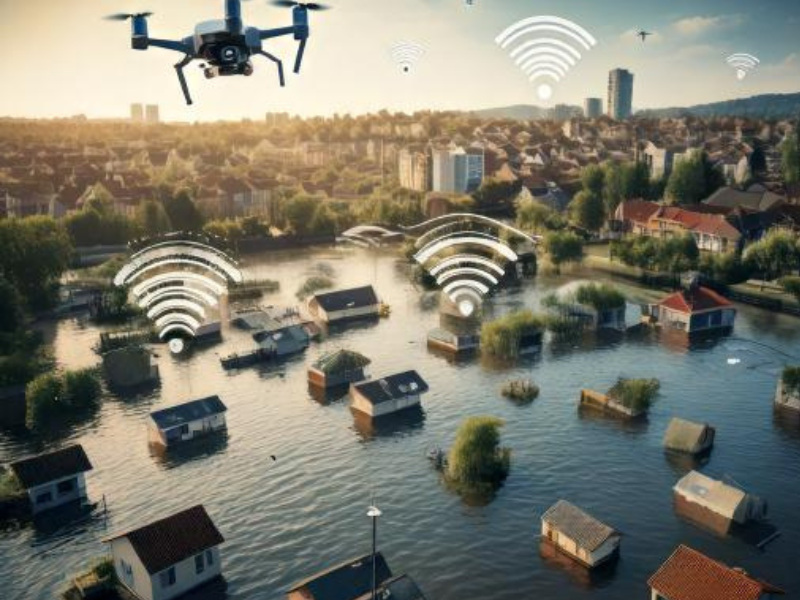
Drones equipped with RFID technology and other sensors can fly over affected areas and capture data about damaged infrastructure, such as buildings and roads. This allows authorities to generate a real-time map of the damage, optimizing decision-making in reconstruction and prioritizing the most vulnerable areas. This application also helps establish safe routes for transporting supplies and rescue equipment, as well as identifying risk areas.
Integrate
The combination of RFID with communication systems and drones amplifies its effectiveness in emergency scenarios. For example, mesh networks, along with RFID devices, allow information to flow uninterrupted even when traditional communication networks are out of service. Additionally, drones equipped with RFID readers can carry out search operations in inaccessible areas, such as mountains or flooded areas, increasing the chances of locating survivors.
Summary
RFID technology is transforming disaster rescue team coordination by providing real-time tracking, improving safety and optimizing resources. This technology allows coordinators to monitor the location of each team member, assigning tasks accurately and safely, especially in high-risk areas. Additionally, by integrating RFID into equipment and supplies, it is easier to control critical resources, ensuring they are available at the right time.
Among its main advantages are the optimization of communication, the reduction of risks by restricting access and adaptability in real time to changes in the environment, such as floods or fires. This efficiency allows for a quick and organized response, essential in situations where every second counts. In summary, RFID significantly improves the effectiveness of rescue operations, maximizing the safety and precision of the technology.
Links to AMIPEM news
We invite you to visit the new AMPIEM page at www.amipem.net and join our network of contacts on the LinkedIn page AMIPEM CONSULTORES S.L.